Recently, the largest lithium mine in the world was discovered at the McDermott volcano in Nevada, USA, with an estimated total value of over trillions of dollars. Lithium ore is one of the most important resources in the era of new energy. Can the discovery of lithium mines by the United States steal business from China?
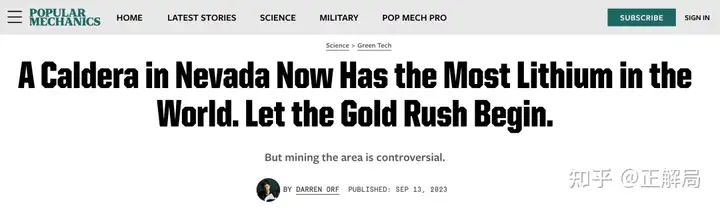
The panoramic view of the McDermott crater dates back to approximately 16.4 million years ago, when there was a violent volcanic eruption here. A large amount of magma erupted, causing the loss of support beneath the volcanic body and surface collapse, which once formed lakes. The volcanic rock after the eruption is like a filter cloth, enriched with lithium containing volcanic ash under the infiltration of rainwater, forming a volcanic crater lake sediment about 40 kilometers long and 30 kilometers wide, with a thickness of over 180 meters. Conservatively estimated reserves are at least 20 million tons, and up to 120 million tons. This is currently recognized by the industry as the world's largest single lithium mine. What's even more rare is that the sedimentary clay has a shallow depth, high content, and is easy to develop. The researchers selected several rock samples from the volcanic crater with grades ranging from 1.83% to 1.87%, demonstrating the enormous potential of the deposit. In the most conservative way of calculation, the reserves of this lithium mine alone are equivalent to the total lithium reserves of Chile (third in the world) and Australia (fifth in the world), and the United States has jumped from fourth place to become the country with the largest lithium reserves in the world.
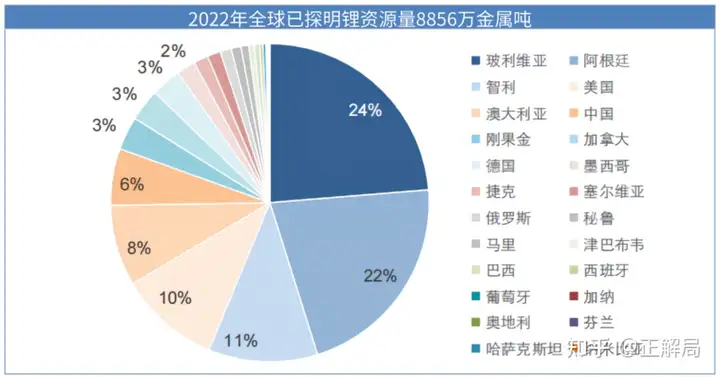
The global ranking of discovered lithium resources in 2022 is well known, and lithium mines are to some extent equivalent to oil, which has long been regarded as a strategic resource by countries around the world. Especially with the widespread adoption of new energy vehicles, the demand for lithium has shown explosive growth. Whether we can hold onto this resource directly affects the national security of the United States. At present, China holds an absolute dominant position in the new energy industry, with exports of new energy vehicles ranking first in the world. With the rise in lithium ore prices, the profit margins of American electric vehicle companies are gradually being squeezed. American capital is urgently looking for low-priced lithium mines, otherwise it will be working for Chinese companies. So, when faced with the news of the discovery of the largest lithium mine in Nevada, the American media cheered, believing that this was an opportunity to break the current lithium resource pattern - because it was really cheap. China is also a major lithium resource country with world leading lithium extraction technology. The most commonly used spodumene ore in China's industry has an average grade of about 1.30% -1.42%, and the cost of lithium extraction is around 40000 to 50000 yuan per ton. The newly discovered clay lithium ore in the United States has a higher grade and lower cost, with a lithium extraction cost of only 20000 tons.
However, the excitement of American media is a bit premature. All mineral development cannot be separated from environmental protection issues. Lithium battery products are green and clean energy products that save carbon and reduce emissions on the user side. However, during the mining process, they can still cause irreparable ecological damage, just like ordinary mining operations. Firstly, there is the wastewater. Starting from the beneficiation and screening process after mining, the extraction of each ton of lithium will turn over 500000 gallons of fresh water into wastewater. If these wastewater seeps into the ground without treatment, it will cause pollution of groundwater resources for up to 300 years. Next is waste. After using up the water, it needs to be dried. During the lithium extraction process, there are at least two months of evaporation, during which a large amount of waste and dust are generated. Mineral extraction requires excavation of soil, causing significant and irreversible damage to local surface water, plants, and animals. Taking lithium mining as an example, in the vicinity of lithium mines in Argentina and Chile, local residents believe that mining pollutes surface water, and the water in the rivers is extremely unnatural blue. Originally, these rivers could be used directly as drinking water for livestock and irrigation water for fields. These impacts on the environment have even been included as case studies by researchers in their papers.
The title of the paper is: The Environmental Impact of Directly Extracting Lithium from Brine. Therefore, Native Americans living near the McDermott volcano strongly oppose lithium mining. The local indigenous people call this place a holy land, and there are at least 91 important cultural sites in the area. Many tribes' primitive food, medicine, and hunting grounds are distributed near volcanoes. In 2021, when the Oregon side of the volcano attempted to mine lithium, the local indigenous people organized to oppose the mining and ultimately achieved victory. Now, the plan for the development of new lithium mines has not yet been implemented, and some indigenous people have reorganized to oppose mining development. In 2021, it was reported that indigenous people hoped Biden would stop lithium mining development on their holy land. In addition to environmental factors, whether lithium mining and extraction can really make money depends on the local industry level. The cost of extracting lithium from clay lithium mines is 20000 yuan, which is only so low when brought to China. Americans do it themselves, and the cost will probably double.
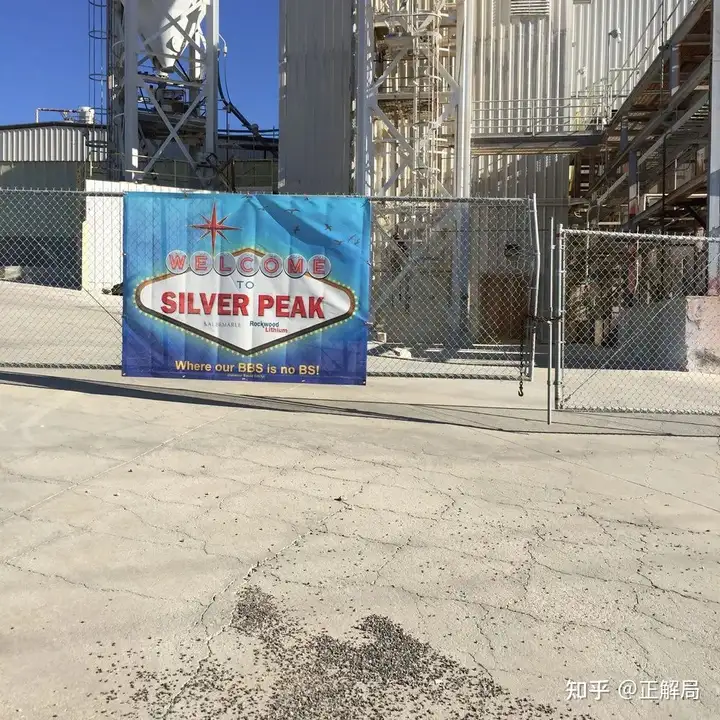
For example, the Kingshan lithium mine was continuously mined and refined from the 1940s to the 1980s. But later on, lithium mines in South America became cheaper, and the Kings Mountain lithium mine started losing money and had to be closed. Based on the current level of lithium extraction in the United States, the cost clearly does not have a competitive advantage. The only lithium mine in the United States with production capacity is the Silver Peak lithium mine, which covers an area of 13000 acres and is also located in Nevada and is owned by Albemarle Corporation. The Yinfeng Lithium Mine, with only over 80 workers, is the only remaining lithium production base in the United States, producing 5000 tons of lithium carbonate annually. This only accounts for a small portion of Albemarle's global production.
The company can produce 85000 tons annually in Chile and has two mines in Australia. Although there are resources available locally, the focus of production is placed overseas for only one reason: the cost of domestic production in the United States is too high! American battery manufacturers are also well aware of this. As downstream companies, they certainly support purchasing raw materials such as lithium domestically in the United States, but mining is a costly and politically charged endeavor. Even if the United States completes this task overnight, it will still face many obstacles, such as cost and environmental challenges. In short, mining lithium ore is not easy. China has seized the opportunity in lithium mining development. China has almost occupied the competitive advantage in all aspects of the new energy industry, from mining to end consumer goods. In the lithium mining industry at the source, China is intensifying its purchases of foreign lithium mines.
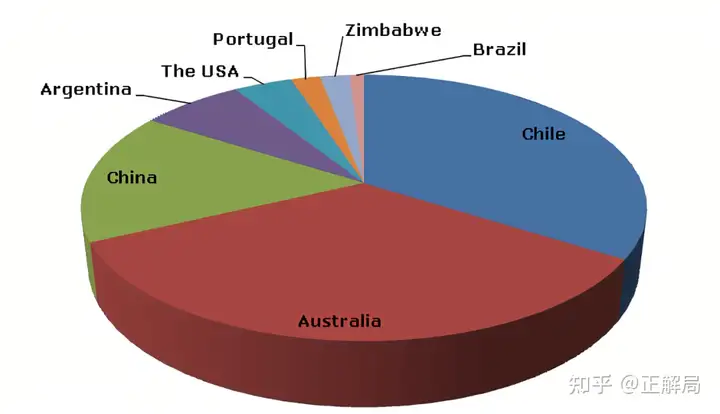
In the past three years, Chinese companies have invested over 4.5 billion US dollars in lithium mining rights, mainly acquiring mines in Latin America and Africa. It is expected that after these acquisitions are completed, they will control one-third of global lithium production. In the lithium extraction industry, China is also the world's number one, with numerous technologies and high levels, firmly ranking first in the world. Although China's lithium ore production accounts for only 16% of the world's total, far less than Australia's 48% and Chile's 26%, China's share in lithium smelting and processing has already reached 65%. Looking at the global lithium ore supply, before the discovery of new lithium mines, the United States accounted for 4% of the world's lithium ore supply, but refined lithium was less than 2%, with little say.
The lithium products in the United States currently heavily rely on imports. Without its own lithium, the United States will be at a disadvantage in the field of new energy. Even the elite class in the United States has offered suggestions and ideas on how to challenge China's dominant position in the lithium market. US media news headline: Challenging China's dominance in the lithium market. The US government has always wanted to make a difference in the lithium market, but so far, there seems to be little progress. When Biden was first elected president, he stated that he wanted to bring the lithium battery supply chain back to the United States, and the important links in the supply chain were the mining and lithium extraction at the source.
In 2021, the US government released the "National Blueprint for Lithium Batteries 2021-2030", with the first of the five goals being to ensure access to raw and refined materials for lithium. In order to loosen the restrictions on the domestic lithium industry, Biden added minerals such as lithium and nickel to the scope of the National Defense Production Act in March last year, in the name of promoting national defense and vigorously promoting the domestic sustainable supply of these raw materials and minerals. In the largest climate bill in US history, the Inflation Reduction Act, it also emphasized the need to rebuild the industrial chain for important raw materials like lithium and produce them domestically in the United States. This year, the United States has adopted a series of diplomatic measures, focusing on key minerals such as lithium, zinc, tin, nickel, and cobalt, seeking cooperation with resource rich countries, attracting "mineral partners" to form small groups, and building a "de Sinicized" key mineral supply chain. It even goes so far as to undermine global supply chain security to establish an ideologically based global supply chain pattern for key minerals. White House National Security Advisor Sullivan has revealed the considerations behind the United States, stating that it currently only mines 4% of the world's lithium ore, while "over 80% of the world's key minerals are processed by China.
In the first half of 2023, the global power battery rankings will be dominated by companies from China, Japan, and South Korea. The United States' eagerness for super lithium mines highlights its anxiety about the backwardness of its lithium industry. The problem is that the international lithium industry has formed an inherent pattern at present. Behind China's curve overtaking in the field of new energy lies decades of hard work and accumulation. It's not that easy for the United States to snatch China's lithium mining business.