Qingdao Kotai Heavy Industry Machinery Co., Ltd.
+86-0532-86109285
 LanguageLanguage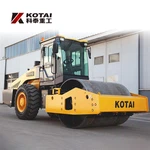
Qingdao Kotai Heavy Industry Machinery Co., Ltd
It is a high-tech enterprise dedicated to the research, development and manufacturing of road construction machinery and high-end structural parts.
Shipping Service
We have established a robust shipping service offered to ensure timely and secure delivery of orders worldwide.
Reliable Supply
We offer a vertically integrated supply chain model to ensure reliable long-term supply and complete traceability.
Customer Service
We prioritize open communication to address our clients' specific requirements and deliver personalized solutions.
Technical Support
Our team of experts is available to assist with troubleshooting, answer technical inquiries, and provide guidance.


What Is Forklift?
Forklift is a small industrial vehicle, having a power operated forked platform attached at the front that can be raised and lowered for insertion under a cargo to lift or move it. Forklifts serve the needs of various industries including warehouses and other large storage facilities.
Whether you're brand new to using forklifts of have worked as a lift operator for years, it's important to understand the many forklift benefits associated with this technology. Forklifts are often underrated in their versatility – they're truly the unsung heroes of modern warehouses and construction sites. Here are just a few of the many benefits associated with forklift use:
Move Materials With Ease
When you need to move heavy, bulky loads, forklifts are the only tool for the job. Even when products are lightweight, bulk shipments can be incredibly heavy. When time is money, unloading by hand just isn't an option. Instead, employees use forklifts to move pallets and entire shipping containers worth of goods to move around the warehouse with ease.
Maneuver Around Corners Fast
Transporting bulk loads across the warehouse is one thing. Doing so with speed and maneuverability is another thing entirely. One of the main benefits of forklifts is their ability to work within a wide range of settings. If your warehouse features narrow aisles and sharp corners, your forklift can still get the job done. Of course, these challenges can be difficult for new and inexperienced workers, which is why forklift operator certifications are so important.
Enhanced Safety
Before the invention of forklifts, workers relied on complex systems of ropes and pulleys to move heavy loads around. These improvised lifting systems weren't very safe. Workers were in constant danger of dropping heavy goods and snapping ropes. Injuries were common, and the work was often backbreaking. Nowadays, forklift application is widespread. This means fewer injured workers and increased rates of productivity.
How Does A Forklift Work?
The Machine Itself: The forklift is usually powered by either an internal combustion engine or an electric motor. This power source not only propels the vehicle but also operates the hydraulic system that controls the lift. Forklifts use rear-wheel steering, which enhances manoeuvrability in tight corners. The operator controls the forklift using levers and a steering wheel.
The Lifting Mechanism: The lifting function of a forklift is controlled by its hydraulic system. When the operator pushes the lift control, it pumps hydraulic fluid into a cylinder, causing a piston inside to push upwards. This action raises the mast (the vertical assembly) and the forks, lifting the load they carry. A pulley system or chain linked to this assembly allows the forks to move vertically while remaining level, ensuring load stability.
Additionally, a counterweight at the rear of the forklift balances the weight of the load being lifted, preventing the forklift from tipping over. The front wheels act as a balance point, much like a seesaw. The forklift also usually has a tilt mechanism that allows the mast to tilt slightly backward or forward, assisting in maintaining load stability during transport and accurate placement when stacking.


Forklift consists of variety of components required to handle the task effectively. From Truck Frame, power source to counterweight are essential for the forklift to function efficiently.
Truck Frame
Truck Frame is the most vital component which forms the base of the machine. All of the key components of the forklift including wheels, counterweight and mast are attached to the truck frame.
Counterweight
The Counterweight is a cast iron weight attached to the rear part of the forklift. The aim of the counterweight is to counter balance the load that is being lifted. On Electric Forklift, Counterweight is fixed to the lead-acid battery.
Power Source
The forklift's power source consists of an internal combustion engine. The engine can be fueled by LPG, CNG, diesel and natural gas. Electric Forklifts derive power from fuel cells or Lead Acid Batteries.
Carriage
The carriage serves as the base to the forklift. The Carriage is fixed on mast rails so that it can be easily moved upward and downward.
Mast
The Mast is a vertical part that lifts up and pushes down the loads. The Mast component consists of Interlocking Rails that offers horizontal control. Like Carriage, Mast may be equipped with rollers.
Forklifts are an essential tool in many industries, primarily for moving materials. Here are some of the most common industrial uses of forklifts:
Warehouses and Distribution Centres: Forklifts are heavily used in warehouses and distribution centres for shipment handling. They are instrumental in loading and unloading trucks and transporting goods around the storage facility.
Construction Sites: Another common use of forklifts is on construction sites. Due to the heavy objects and building materials that need to be moved around, forklifts play a crucial role in these environments.
Manufacturing and Industrial Operations: Forklifts are also used widely in manufacturing and industrial operations. These can range from small businesses to large complex industrial operations where they aid in moving materials of different sizes and weights.
Shipping Ports and Truck Loading/Unloading: Forklifts are often used at shipping docks and during truck loading and unloading processes. They help move large containers and other heavy items quickly and efficiently.
Recycling Facilities: Forklifts play a crucial role in recycling operations where they are used to move and organise heavy bales of compacted recyclables, load and unload delivery vehicles, and assist with the general maintenance and organisation of the facility. Their ability to handle heavy loads makes them an invaluable tool in these environments.
Event Venues and Film Sets: Forklifts are often used in setting up and tearing down events at concert venues, theatres, or film sets. They can move heavy equipment like speakers, stage sets, lighting rigs, and even portable seating. This helps to make the setup and breakdown processes much quicker and more efficient, especially when dealing with large-scale events or productions.
Forklift trucks are a ubiquitous piece of heavy duty equipment found in a wide range of industries. They are a rugged and durable method for moving goods, products, supplies, parts, and components from one location to another without damaging facilities or harming staff. Introduced in the middle of the first industrial revolution, forklifts have become necessary in the rapidly growing industrial world.
Regardless of their many values, it is important to select the right forklift to fit an application since ones that are too small can be damaged by over capacity lifting and ones that are too large can be wasted on light loads. There are three important factors to consider when choosing a forklift truck.
Capacity of Load
The type of load is the first consideration in the selection process since it will be the main factor in regard to how safely the forklift will be able to handle the workload. Multistage masts, articulated movement, and heavy duty forks may not be necessary for a narrow aisle warehouse. Side loader forklifts or turret forklifts may be more suited for such conditions and have the right capacity.
Forklift Truck Versatility
Versatility is one of the reasons that forklift trucks have been used by industry for close to 200 years. There is a forklift to fit any lifting and loading conditions. Free lift multistage masts allow the flexibility for reaching extreme shelf heights in narrow aisles. Triplex swinging mast forklift trucks offer a great deal of freedom of movement and adjustment.
Cost of Forklifts
In many cases, the cost is the first factor that buyers use as the determining factor for the purchase of equipment. Although this is a necessary consideration, it cannot be the sole deciding factor. A key component of forklift use is safety since it is the means for lifting heavy loads without the need for manual labor. The two factors that need to be considered in the purchase of a forklift are the initial cost compared to the increased benefits over time. Amortized over years of use, a highly versatile and highly functional forklift truck will pay for itself in efficiency, improved product movement, and labor savings.

The real game-changer for forklifts was the invention of the hydraulic-powered lift system. With this technological advancement, the machines could lift more, higher. As the industrialization of the world continued, a standard pallet size became common. This one-size-fits-all standard made the development and application of forklifts much easier.
Just like in WWI, the Second World War spurred forklift use and pushed for more efficient storing methods of materials in warehouses. Some say that it was the second World War that really established the standard we now use for storing materials – including the use of forklifts in almost every warehouse and storage facility around the world.
Since then, most upgrades to the machine have been about comfort, maximizing lifting capacity, and reducing emissions. Today's forklift often has fuel cell technology, ergonomic cab designs, and even runs off electric power.
Forklifts are an important tool in many industries, especially at construction sites, warehouses, and dockyards. This is because these and other work locations often have heavy loads that need a powerful forklift truck to lift and move them.
What Is a Forklift Mast?
Simply put, the forklift mast, also known as the upright, is the part of the machine that does the work. It's the mechanical structure on the front of the lift truck that allows it to raise loads to necessary heights. A forklift mast lifts by hydraulic displacement and lowers using the force of gravity.
The mast has multiple sections that work together to lift. Nested rails allow the mast to extend and lower. The carriage is attached to the inner rails and chains, which are attached to both the carriage and the mast at anchors, help raise and lower it. The forks, along with other attachments, ride the carriage and are used for material handling.
Considerations When Choosing a Forklift Mast
Free Lift
One factor to consider when choosing a forklift mast is free lift, especially in a location with low overhead clearance. Free lift is how high a forklift operator can raise the forks without the mast height changing. While free lift is a huge benefit if you're working in confined spaces, the lift mechanism can limit visibility if it is located in the center of the mast.
Lowered Height
Another factor that affects forklift mast selection is the lowered height, also known as the collapsed height. The lowered height is the distance from the floor to the top of the mast when the mast is lowered.
The lowered height is especially important to consider if your forklift will be traveling through confined spaces like doorways.
Extended height
At the other end of the spectrum is the extended height of a mast. This is the distance from the floor to the top of the mast when it is fully extended.
Lift Height
Lift height isn't the same as extended height because lift height (also known as maximum fork height, or MFH) is measured from the floor to the forks, not the top of the mast or load backrest. Typically, the recommended lift height is six inches above your highest shelf so that the forklift has room to maneuver.
Common Types of Forklift Masts
Single-Stage (aka Simplex) Mast
The single-stage mast, also known as a simplex mast, does not have free lift and only has one channel. The mast must extend higher to stack loads, which is why this is seen outdoors where overhead clearance isn't a concern (i.e., no limited lifting height).
Two-Stage (aka Duplex) Mast
The two-stage mast, also known as a duplex mast, has free lift available and is often used for stacking and double stacking for indoor applications with limited overhead.
Two-stage mast forklifts have good visibility since there aren't as many mast sections impeding the driver's view. There's a hydraulic cylinder in the center of the mast to push loads upward. Loads can rise (to an extent) while the mast is stationary.
Three-Stage (aka Triplex) Mast
The most common and versatile forklift mast is the three-stage mast, or triplex mast. The outer stage on this mast doesn't move. It has two sliding rails and an angled stationary rail. The triple-stage mast has free lift and can reach greater heights, making it good for warehouse applications.
Four Stage (aka Quad) Mast
The four-stage mast, or quad mast, has the highest reach of all. This mast has four sets of moving rails and chains and is much more complex than other masts. It's also important to note that the four-stage mast may have restricted visibility and require special training to drive.
Conclusion
A forklift is an important tool when you're moving and racking heavy loads. However, it's vital to make sure you select the right forklift with the right mast and know how to prevent forklift accidents.
To choose the forklift truck you need, you must know the vertical space of your facility (or if you'll be outdoors), the height of the racks where you'll be placing or removing loads, and the sizes and shapes of the loads to be handled.
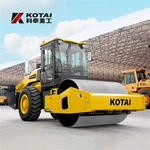
Since the establishment of the company, Kotai Heavy Industry has always adhered to the principle of people-oriented and customer demand-oriented. The rollers it produces are exported to more than 60 countries in the Middle East, Africa, America, Southeast Asia, Central Asia, etc., and have won the title of "China's Construction Machinery Industry Users" for many consecutive years. Annual TOP50 "Technological Innovation Gold Award, Golden Word of Mouth Award, Application Contribution Gold Award, Best Product Appearance Design Award" and "National Torch Plan Project Award", etc.


We're professional forklifts manufacturers and suppliers in China, specialized in providing high quality products and service. We warmly welcome you to buy high-grade forklifts for sale here from our factory.
(0/10)
