
Qingdao Kotai Heavy Industry Machinery Co., Ltd
It is a high-tech enterprise dedicated to the research, development and manufacturing of road construction machinery and high-end structural parts.
Why Choose Us
Shipping Service
We have established a robust shipping service offered to ensure timely and secure delivery of orders worldwide.
Reliable Supply
We offer a vertically integrated supply chain model to ensure reliable long-term supply and complete traceability.
Customer Service
We prioritize open communication to address our clients' specific requirements and deliver personalized solutions.
Technical Support
Our team of experts is available to assist with troubleshooting, answer technical inquiries, and provide guidance.
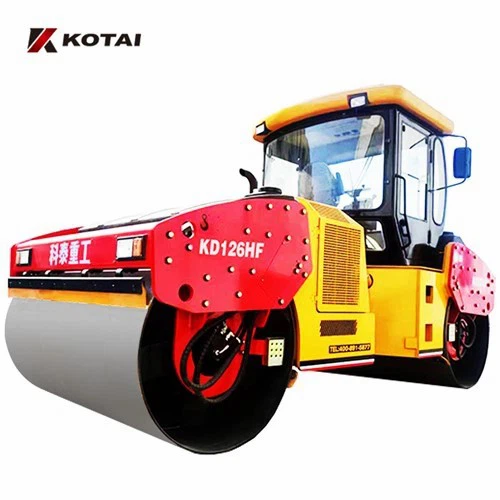
Full Hydraulic Double Steel Roller
Full Hydraulic Double Steel Roller is an advanced road construction and ground compaction equipment with a full hydraulic drive system and equipped with two steel rollers. This roller combines the efficient performance of a full hydraulic system with the compacting advantages of a double steel wheel design, making it excellent in a variety of compaction projects, especially suitable for asphalt pavement and other projects requiring careful compaction.
What Is Full Hydraulic Double Steel Roller?
A full hydraulic double steel roller is a road compactor used to compact soil, gravel, asphalt, or concrete before road construction. It has a vibration control device that includes electromagnetic valves, vibrating motors, and a vibrating pump.
Uniform compaction effect: The design of two steel wheels can provide a more uniform pressure distribution when the roller is moving forward, effectively reducing the uneven phenomenon of the road after compaction, ensuring the consistency of the compaction effect and the smoothness of the road surface.
Improve the compaction efficiency: The double steel wheel roller covers a wider working area in the same process, and can complete more work in a shorter time compared with the single steel wheel roller, improving the engineering efficiency.
Enhanced stability: Two steel wheels provide better machine stability, especially when dealing with uneven or soft ground, and the configuration of two steel wheels helps to reduce machine shaking and improve the smoothness of operation.
Wide adaptability: The double steel roller is suitable for many types of compaction tasks, including asphalt pavement, concrete foundation, fill and gravel pavement, etc., to meet the compaction needs of different materials and different thickness levels.
Full hydraulic drive system: Full hydraulic drive provides smooth and continuous power output, ensuring efficient and accurate operation, while also reducing the probability of mechanical failure and reducing maintenance costs.
Tandem Rollers - How Vibrations Are Produced in The Drum
An eccentric weight attached to the shaft of a free-spinning hydrostatic motor inside the drum produces vibrations. There are some rollers with a second weight that can be rotated relative to the main weight to adjust the vibrating amplitude and thus the compacting force.
In the most simple form of tandem roller weight for producing vibration is added by simply putting large pieces of stones inside the roller. As the machine moves, the stones clash with the wall of the roller, and hence vibrations are produced.
How Does a Tandem Roller Work?


Tandem rollers operate by utilizing two smooth or vibrating drums that rotate in sync to compact various surfaces, such as soil or asphalt. Here's a basic overview:
Drum Rotation: The tandem roller's drums rotate as the machine moves forward. The rotation can be static (non-vibrating) or dynamic (vibrating), depending on the compaction requirements.
Weight Distribution: The weight of the tandem roller is distributed evenly between the two drums. This ensures uniform compaction across the entire width of the roller, preventing uneven surfaces.
Compaction Action: As the tandem roller advances, the drums exert downward pressure on the material beneath them. This pressure compacts the soil or asphalt, reducing air voids and increasing material density.
Vibration (if applicable): In vibratory tandem rollers, the drums can oscillate or vibrate, enhancing compaction efficiency. Vibrations help settle the material and reduce friction between particles, leading to better compaction results.
Control Mechanisms: Operators control the tandem roller through a set of controls. They can adjust factors like drum vibration intensity, machine speed, and steering to optimize compaction based on the specific requirements of the project.
Monitoring and Adjustments: Operators monitor the compaction process and may make adjustments as needed. Modern tandem rollers often come equipped with sensors and technology to measure compaction levels, allowing for real-time adjustments.
Repeat Passes: Depending on the project specifications, the tandem roller may make multiple passes over the same area to achieve the desired level of compaction. Each pass further compresses the material, ensuring stability and durability.
A tandem roller is a heavy-duty construction machine equipped with two large drums that rotate in unison to compact various materials such as soil, asphalt, or aggregates during construction projects. These heavy-duty rollers are instrumental in achieving optimal compaction, ensuring stability and durability of surfaces. Tandem rollers are essential in various applications, ranging from road and pavement construction to industrial and infrastructure projects.
Components of tandem rollers
Drums: Two smooth or padfoot drums for compaction.
Engine: Powers the tandem roller.
Frame: Provides the structural support for the entire machine.
Vibration System: Facilitates compaction through vibratory motion.
Water System: Used for cooling the drums during operation.
Controls: Allow operators to manoeuvre and adjust compaction settings efficiently.
Different Types of Road Rollers You Need
Road roller or compactor is a type of engineering vehicle that commonly used to compact soil, gravel, concrete, asphalt or other materials in road construction, airport or port foundation work, at landfills or in agriculture.
Therefore, different types of road rollers are produced to meet the different project requirement. SANY provides you three types of road rollers including single drum roller, tandem roller, and pneumatic tyred roller. Fine production, years of research and development, rigorous tests ensure that each roller is defect free, even when working in the most complicated conditions.
Single drum rollers
SANY single drum roller is a vibratory type roller consisting of a large steel drum in front and two wheels in rear. The single drum rollers are available in a wide range of operating weight from 10 tons to 16 tons, with drum 1.5m to 1.7m in diameter and 2.13m to 2.17m in wide. The self-propelled vibratory drum delivers greater excitation force, increasing compaction efficiency and productivity in road construction.
Tandem rollers
SANY tandem roller consists of a large drum in front and a vibrating drum on the rear end, with operating weight varies from 3 tons to 13 tons. Two heavy drums surely increase the tandem rollers' weight, at the same time, the rear drum aids in compacting the road surface as the front drum passes over it. The tandem rollers adopt water wheel type lubrication on the vibratory bearing, and its plastic lined water tanks can provide water continuously to prevent asphalt from sticking to drums during the compaction.
Pneumatic tyred rollers
SANY pneumatic tyred roller or rubber tyred roller is made up of a heavy truck with rows of four closely spaced tires, widely used to compact asphalt road and cement stabilized base as well. The pneumatic tyred roller's maximum operating weight ranges from 20 tons to 30 tons, ground pressure adjustable from 200 kPa to 540 kPa, which greatly increase the evenness and smoothness of road surface.
Single vs. Double Drum Roller
Selecting the correct drum roller can make a substantial difference when it comes to preparing ground for construction projects and smoothing out surfaces for road work. With this comprehensive guide, we aim to explain the differences between single drum rollers and double drum rollers – and when each should be used – as well as providing insights on rental rates so you can make an informed decision when renting equipment.
Understanding Drum Rollers
A drum roller, also referred to as a road roller or smooth drum roller, is a heavy-duty machine used for compacting and leveling surfaces such as soil, gravel and asphalt. These machines are commonly found in construction projects related to road work, paving and creating building foundations. Single drum rollers and double drum rollers exist with key differences being determined by how many drums (circular wheels) they utilize in compaction processes.
Single Drum Roller
Single drum rollers are heavy-duty pieces of equipment with one large drum mounted at its front end and specially-made tires at the rear, fitted with sturdy treaded tires designed to offer excellent traction allowing it to move across various terrains easily and comfortably. An operator cab located centrally gives operators clear views of surrounding environments and their drum.
Double Drum Roller
Double drum rollers (commonly referred to as tandem rollers) feature two large drums – one in the front and one in the rear – designed to compact surfaces both ahead of and behind of their machine simultaneously, giving greater efficiency and power than conventional machines with tires. However, depending on project requirements this lack of tires could both benefit or detract.
Comparing Applications
To determine which drum roller type best meets the demands and difficulties associated with your task, it's essential to assess its requirements and challenges carefully. Here we highlight suitable applications of single and double drum rollers.
Jobs for Single Drum Rollers
Leveling ground for sidewalks, driveways and building foundations
Compacting soil for sports fields or landscaping projects
Paving roads (although less efficiently than double drum rollers)
Projects that require extra mobility and precision, like working in tight spaces or making sharp turns.
Jobs for Double Drum Rollers
Flattening heavy objects such as subgrade and subbase layers on roads
Highway paving, where efficiency and speed are important
Large-scale projects requiring multiple passes with one drum roller such as flattening parking lots or leveling large areas to construct new roads would typically need multiple passes with just a single roller for completion.
Drum Roller Rental Considerations
Consider renting the equipment instead of buying outright when selecting your drum roller for your project. Renting drum rollers provides several advantages over purchasing them outright.
Cost Savings
Renting can often be more cost-efficient than purchasing, especially for short-term projects or when the equipment won't be needed regularly.
Flexibility
Drum roller rentals make selecting the appropriate machine easier without making an inconvenient long-term commitment. This enables you to switch between single drum rollers and double drum rollers depending on each job's individual specifications, offering greater versatility in selection.
Maintenance
Renting a drum roller means maintenance and repair costs will typically be covered by your rental company – helping keep costs to a minimum and assuring optimal working condition of equipment.
Selecting the Right Drum Roller Rental
With so many drum roller rental options available to you, selecting the suitable equipment for your project is key. Keep the following factors in mind when making this important choice:
Project Requirements
Consider all of your project requirements carefully – such as type of surface, compaction depth and maneuverability needs – when choosing between single drum roller and double drum roller models for use on this task. This will enable you to make an informed decision.
Drum Width
Think carefully about how wide a drum you require relative to the size and scope of the area you need to compact. Wider drums will enable you to cover more ground quickly, speeding up completion.
Weight and Power
Make sure your drum roller has enough weight and power to handle the materials or surfaces that require compacting, such as asphalt applications or dense soil compacting.
Tandem Roller Introduction And Its Market Analysis
Tandem Roller market research reports suggest a positive outlook for the market, driven by increased infrastructure development activities globally. Tandem Roller is a type of road roller used for compacting asphalt pavement. Major target markets include construction, road building, and infrastructure projects. Top companies in the market include Wirtgen Group, Dynapac, Caterpillar, and Sakai Heavy Industries. Factors driving revenue growth include growing urbanization, government investments in infrastructure, and technological advancements in road construction equipment. The main findings of the report highlight the increasing demand for tandem rollers and recommend companies to focus on product innovation and strategic partnerships for sustainable growth.
The Tandem Roller market is segmented into three types: Large, Medium, and Small Tandem Road Rollers. These machines are used for road construction, public engineering, and other applications. Large Tandem Road Rollers are typically used for major construction projects, while Medium and Small Tandem Road Rollers are suitable for smaller scale projects.
Regulatory and legal factors specific to the Tandem Roller market vary depending on the country or region. In some areas, there may be strict regulations regarding noise levels, emissions, and safety measures for operating these machines. It is important for companies in this market to stay abreast of any changes in regulations to ensure compliance and avoid any penalties.
The Tandem Roller market is poised for growth as infrastructure development projects continue to be launched worldwide. Companies that manufacture and distribute these machines need to be aware of the specific regulatory and legal factors that may impact their operations in order to stay competitive and meet the demand for Tandem Rollers in the market.
Our Factory
Since the establishment of the company, Kotai Heavy Industry has always adhered to the principle of people-oriented and customer demand-oriented. The rollers it produces are exported to more than 60 countries in the Middle East, Africa, America, Southeast Asia, Central Asia, etc., and have won the title of "China's Construction Machinery Industry Users" for many consecutive years. Annual TOP50 "Technological Innovation Gold Award, Golden Word of Mouth Award, Application Contribution Gold Award, Best Product Appearance Design Award" and "National Torch Plan Project Award", etc.


FAQ
Hot Tags: full hydraulic double steel roller, China full hydraulic double steel roller manufacturers, suppliers, factory