Due to the increase in traffic flow, severe overloading, and many of the existing national and provincial trunk roads that have reached or exceeded the design lifespan, most of them are no longer able to meet the traffic needs and urgently require major repairs or expansion. In the traditional sense, road surface overhaul is mainly carried out through renovation or excavation and reconstruction, which involves the disposal of waste materials and the extraction of new aggregates from the original and old roads, damaging the surrounding environment and causing resource waste. The asphalt pavement adopts a cement stabilized on-site cold recycling construction process to recycle and utilize the original asphalt surface layer and base materials, fully utilizing the old road materials to restore and improve the strength of the old road, achieving energy conservation and consumption reduction, reducing environmental pollution, and reducing project costs.
The on-site cold recycling construction technology of asphalt pavement has been applied multiple times in major and medium maintenance projects of national and provincial trunk roads outside the province. The construction technology has been promoted, and the progress and development of construction equipment have made the on-site cold recycling technology of asphalt pavement increasingly mature. Our company has started research and development on the recycling technology of old asphalt pavement materials, and successfully used cement stabilized on-site cold recycling construction method to complete the pavement overhaul project, forming a relatively mature construction technology.

1. Construction characteristics
1.1 Protecting the Environment and Resources - Because old materials can be fully utilized on-site, the mining of new materials is reduced, resulting in energy conservation and environmental protection. There is also no problem with the transportation of old materials and the arbitrary disposal of waste materials. The construction process is free from dust and exhaust gas pollution, saving resources and protecting the environment.
1.2 Low cost - Compared to traditional construction methods, the use of old road materials reduces material procurement costs.
1.3 High Production Efficiency - High construction efficiency, short construction period, reduced traffic closure time, and significant social benefits.
1.4 Simple Process - Due to the fact that all materials from the original old road surface are utilized on-site, there is no need for excavation, transportation, factory processing, and backfilling, which simplifies the construction process.
2 Construction technology
2.1 Process flow
Mix design → Construction layout → Sorting out the original road surface → Preparing new materials → Placing and spreading cement → Mixing with a cold recycling machine → Leveling and rolling → Joint treatment → Health preservation.
2.2 Key points of operation
2.2.1 Mix proportion design
Raw material analysis and grading design:
Slowly mix at a constant speed of 6m/min to 8m/min in the on-site regeneration machine for sampling. The laboratory screens the selected mixture and analyzes that its gradation meets the specified gradation requirements. The strength of the trial mix is determined to meet the design requirements at a 5% cement dosage.
2.2.2 Construction layout: Measure and lay out the centerline and sidelines of the route according to the design drawings. Temporary leveling points should be set up on both sides of the route, with one set every 100 meters, to facilitate the elevation review of the road surface nearby during construction. During the construction process, it is necessary to ensure frequent measurement, verification, and correction.
2.2.3 Organize the original road surface and clean the construction section on that day to keep the old road surface clean.
2.2.4 Prepare new materials. If the particle size distribution of the recycled mixture on the original road surface cannot meet the specification requirements, add new aggregates according to the construction mix proportion. If the elevation cannot meet the design requirements, add new materials according to the thickness and design grading. Calculate the amount of new material added per square meter. Spread the new material evenly on the old road surface and check if the new material is evenly distributed.
2.2.5 Placement and Spreading of Cement: Based on the planned amount of work completed on the same day and the paving area of each bag of cement (50kg), calculate the required amount of cement, and deliver the cement to the paving section. Arrange the cement evenly according to the amount per linear meter. Mark and spread with lime grid on the working face, manually spread the cement evenly, and ensure that the spreading area of each bag of cement is equal. After the cement is spread, check if the cement is evenly distributed.
When the mixing and spreading length of the cold regeneration machine (model WirtgenWR2500S) reaches 80-120 meters, the cold regeneration machine can start working. The cutting depth of the cold regeneration machine is controlled according to the design thickness, and the walking is carried out at a constant speed of 6m/min to 8m/min to ensure even mixing. The amount of water added is controlled by the cold regeneration machine. Due to the limitations of walking speed and mixing rotor speed in adding water to cold regeneration machinery, deviations are easily formed. Regular on-site testing is necessary to ensure that the water content is within the allowable range of specifications (optimal water content ± 2%). The mixing of the cold regeneration machine should ensure no blade leakage, and the adjacent mixing should overlap by at least 20cm.
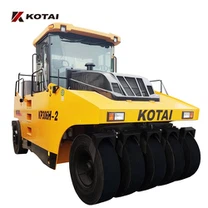
After the mixing of the leveling and rolling cold regeneration machine is completed, the J20 vibrating roller is used for initial compaction, and the construction personnel command the leveling machine to level based on the measurement results. After the on-site elevation, flatness, and width meet the requirements, immediately use a CA30 vibration roller to vibrate and compact for 4 times (strong vibration for 3 times and weak vibration for 1 time), and finally use a three wheel roller to compact for 2 times to form.

Construction precautions: ① Roll from both sides to the center in the straight section, and roll from the inside to the outside in the super high section. ② Adjacent rolling should overlap by 30cm, so that the entire width range is uniformly compacted to the specified density During the rolling process, always keep the surface moist and do not turn around or brake sharply on the road section that has already been rolled. ④ The time from mixing with water to the end of compaction shall not exceed the initial setting time of the cement used.
2.2.8 Joint treatment: The overlap width of the longitudinal joint is 100-150mm, and the formed transverse joint should be treated. During construction, the shutdown should be minimized as much as possible. If the shutdown exceeds the initial setting time of the cement, the entire cold regeneration machine must be retreated to a distance of 2m from the already regenerated road section for cold regeneration. After spreading the cement, the construction should be carried out again according to the above method.
2.2.9 After being rolled and tested as qualified, the cold recycled structural layer shall be maintained in a moist state for no less than 7 days during the curing period.
Ensure proper traffic control and prohibit the passage of any motor vehicles during the health period.
3 Investment comparison
For the 6.9km second-class highway, the investment is reduced by 285501 yuan by using the cold regeneration process,